Manufacturing in the Hunter is undergoing a quiet resurgence, with $26 billion in annual output and a growing number of businesses embracing clean energy, digital transformation and inclusive practices. That shift is reflected in a record number of applications for the Hunter Manufacturing Awards, with a 44% increase in applications, including 11 first-time entrants.
The strong response points to a sector in transition, with significant growth seen in award categories such as innovation, product design and sustainability. The introduction of two new categories, Diversity in Manufacturing and Digital Transformation, was also met with enthusiasm, reflecting how manufacturers across the Hunter, Central and Mid North Coasts are adapting to the demands of a modern, resilient economy.
“This year’s entries tell a bigger story than just numbers,” said HMA Chair Jacqui Daley. “They reveal a sector that is shifting gear, embracing advanced technologies, investing in cleaner, smarter production, and creating more inclusive workplaces.”
Manufacturing continues to be one of the most important industries in the region, second only to mining in terms of output. While traditional industries such as steelmaking, aluminium and machinery fabrication still play a key role, the Hunter’s manufacturing landscape is being reshaped by growth in clean energy technologies, defence and aerospace, pharmaceuticals, and food and beverage production.
“In every corner of our region, we’re seeing manufacturers step up with creativity and capability, from batteries and boats to breakfast cereals and biotech,” said Daley. “The 2025 entries showcase the real breadth and depth of talent we have here.”
Now in its 21st year, the Hunter Manufacturing Awards program continues to celebrate the people, processes and progress shaping the region’s industrial future.
Winners of the 2025 Hunter Manufacturing Awards will be announced at the gala event on Thursday 30 October 2025 at NEX, Newcastle . The event brings together manufacturers, innovators, educators and supporters to celebrate excellence and chart the next chapter in the region’s manufacturing story.
Let’s address the elephant in the procurement room: large manufacturers often win RFPs for legitimate reasons. Economies of scale, established relationships, comprehensive capabilities, and superior resources create genuine competitive advantages that positioning alone cannot overcome.
But here’s what the data reveals: positioning still matters in the margins of decision-making. And for SME manufacturers, those margins often determine whether they are even invited to compete.
So where does that leave SME manufacturers who need to win their share of contracts to survive and grow?
Insights from the Australian Department of Finance indicate that SMEs secure 52.3% of government contracts by volume, yet capture only 18.8% of the total spending value. The brutal economics tell the story: average SME preparation costs reach $15,000 per $250,000 contract, with first-time bidders achieving a success rate of just 16.7%.
However, these averages mask significant variation across sectors. Engineering services tell a different story entirely, with SMEs capturing 59.3% of market share. Professional services follow at 51.5%, and IT and telecommunications at 48.5%. What connects these sectors? They’re all knowledge-intensive industries where expertise positioning matters more than scale advantages.
Manufacturing presents another encouraging data point. Margins have improved from 9% to 11% since 2020, signalling that buyers are increasingly prioritising value over pure cost considerations. This shift creates genuine opportunities for positioning strategies that emphasise capabilities beyond price competition.
Research from Challenger Inc.’s decade-long study of over 5,000 B2B purchase decisions reveals the measurable impact of positioning: sales experience drives 53% of customer loyalty, compared to just 9% for price factors. Brand reputation and product delivery each contribute 19%.
This research translates directly to RFP procurement, where positioning impacts outcomes at four critical stages:
Analysis of successful Australian manufacturing SMEs reveals three positioning strategies with measurable impact on procurement success:
Market leaders don’t just respond to RFP specifications – they shape how buyers think about their problems. Positioning strategies are most effective when selling firms communicate attributes that are both congruent and important to the buying firm.
SAGE Automation exemplifies this approach. Rather than positioning as “automation suppliers,” they established themselves around “The Best Thinking”, helping buyers recognise that their real challenge wasn’t just automation, but strategic industrial transformation. This positioning shift moved sales conversations from technical specifications to strategic partnerships.
SMEs achieve their strongest performance by focusing on niche markets rather than trying to appeal to the broadest possible audience. Knowledge-intensive sectors reward specialised expertise over size advantages.
This principle applies even to established firms looking to break through growth ceilings. MRA Engineering demonstrated this lever effectively in their RFP strategy. After 25 years of providing general engineering services, they repositioned around their proprietary Smart Automation Products for global markets. By separating their Australian services from their specialist product strategy, they transformed from regional generalist to global specialist, enabling worldwide expansion.
Even when price remains a primary factor, positioning can shift the evaluation criteria toward factors like technical competence, relationship quality, and total cost of ownership.
This approach works best in mid-tier contracts ($200K-$4M) where SMEs compete most effectively. It fails in commodity manufacturing where scale economics dominate, but resonates when positioning addresses risk reduction, innovation capabilities, or long-term partnership value.
Before developing your positioning strategy, SME manufacturers must understand where positioning can and cannot help. These structural barriers determine which battles are worth fighting:
Even with the right positioning strategy, execution determines success. Positioning takes 12-18 months to influence market perception meaningfully, and it works in conjunction with, not instead of, competitive fundamentals. SME manufacturers need to consider three critical factors when implementing positioning strategies:
Evidence-based positioning is most effective when SMEs focus on winnable battles: knowledge-intensive sectors, mid-tier contracts, and pre-qualification stages where expertise creates measurable advantage.
Successful positioning builds around three core elements: problem identification capabilities, specialised technical expertise, and relationship-based value delivery. These approaches align with research showing that sales experience and technical competence drive buyer loyalty more than price factors alone.
The goal isn’t to compete in every RFP opportunity—it’s to compete where positioning genuinely influences outcomes. In those targeted scenarios, strategic positioning transforms procurement from pure price competition into expertise evaluation.
Technical capabilities remain the foundation. Strategic positioning ensures they receive the consideration they deserve.
Sponsored by Brand chemistry
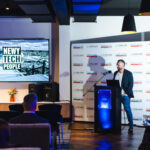
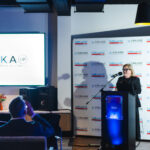
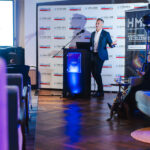
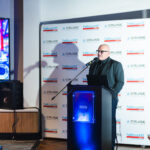
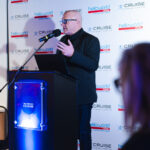
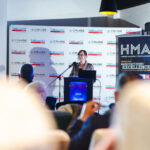
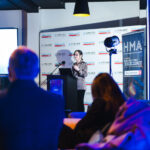
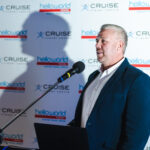
Manufacturing leaders, innovators, partners, and supporters came together at Helloworld Travel HTG’s incredible Hunter Street venue, The Explorer Lounge, for an evening of catchups, networking and valuable industry updates.
We heard from HMA Chair, Jacqui Daley on how the Hunter Manufacturing Awards 2025 program is progressing as we draw closer to the end of the applications process and move into judging. We also heard from Greg Gates – Sirron Holdings Group about their latest manufacturing challenges and achievements, Tara McGrath – Helloworld Travel who shared updates on the latest international travel flights and deals for business travel, Andrew Caska GAICD – Caska Intellectual Property on IP rights in Australia and internationally for manufacturers, Mathew Dempsey – Downer Group Rail and Transit Systems on what is happening at Downer, and their latest key manufacturing initiatives, and James MacDonald and Melinda Sietsma – Newytechpeople who shared the latest trends they are seeing in engineering and manufacturing across the region, and what we can learn from the state of the market.
A big thank you to Sirron Holdings Group for sponsoring this event and to everyone who joined us to make it such a success. It is always a favourite on the HMA calendar.
Click and swipe to see the full gallery from Poppy Seed Media.

















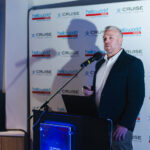


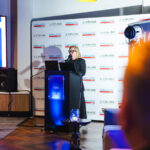

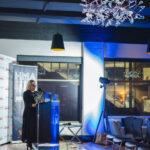




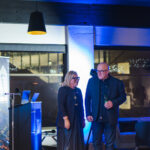
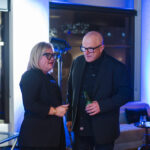


































Swipe to see the gallery from the talented Poppy Seed Media
The Hunter Region is leading Australia’s shift to clean energy and local manufacturers are at the heart of the transformation.
From building the components that keep renewable energy projects moving to exporting critical technologies around the world, manufacturers across the Hunter are helping to rewire the nation’s energy future.
“Manufacturing is the backbone of the clean energy transition,” says Jacqui Daley, Chair of the Hunter Manufacturing Awards (HMA). “Here in the Hunter, we’re not just talking about a low-carbon future, we’re making it. Our manufacturers are designing, fabricating and exporting the tools and technologies that will support our clean energy future for generations to come.”
The Hunter is already home to trailblazing businesses in electrification, advanced welding, battery materials processing, clean-tech design and heavy industry supply. As coal-fired power stations retire, these industries are expanding to meet the demands of renewable energy zones, grid-scale storage, and green hydrogen.
“Energy transition is a once-in-a-generation opportunity, and it’s manufacturers who will make it real. The skill base is here. The future is here.”
Aaron Wylie, General Manager Future Energy Solutions from Downer Group agrees. “The region’s industrial expertise gives us a head start,” said Wylie. “Whether it’s delivering the infrastructure needed for renewable integration, transmission upgrades, and grid-scale storage, Downer sees the Hunter as a critical player in Australia’s energy journey.
“As a key manufacturing and distribution hub for bespoke switchboards to large scale transportable switchrooms, we’re already building the backbone of Australia’s future energy system right here in Hexham – one piece at a time,” said Aaron.
Now in its 21st year, the Hunter Manufacturing Awards continue to celebrate the region’s capacity to innovate, adapt and lead. With support from industry leaders like Whiteley Corporation, Hedweld, BAE Systems Australia, and TAFE NSW, the awards shine a light on manufacturers who are pushing boundaries and championing sustainability.
“The Hunter has always punched above its weight when it comes to manufacturing,” said Jacqui Daley. “Now, as we build the next chapter of our energy story, that same spirit of ingenuity and resilience is what will set us apart.”
Image credit: Kadmy/stock.adobe.com
Time is running out for manufacturers across the Hunter, Central Coast, and Mid-North Coast to submit their nominations for the Hunter Manufacturing Awards 2025 (HMA 2025), with entries closing in just a few weeks.
Now in its 21st year, the Hunter Manufacturing Awards shine a spotlight on the region’s manufacturing excellence, recognising businesses of all sizes that are leading through innovation, resilience, and community contribution.
Hunter Manufacturing Awards Chair Jacqui Daley says there are incredible manufacturers doing outstanding work across our region, but many don’t stop to celebrate their achievements.
“This is their chance to showcase what sets them apart, gain recognition, and take pride in what they’ve built.”
“With over a dozen award categories, manufacturers at every stage of their journey can find a category that fits. Whether it’s pioneering sustainability, launching a new product, mentoring apprentices, or driving global exports, HMA wants to hear from you.”
Past winners have used the platform to spotlight breakthrough achievements, including the 2024 Collaboration Partnership Award winners: The Melt, Allegro Energy, and Muswellbrook Shire Council, who joined forces to develop a first-of-its-kind Microemulsion Redox Flow Battery, a breakthrough in safe, scalable energy storage.
“The award recognised both our battery technology and the power of regional collaboration,” said John Klinkenberg, Principal Industrial Designer at The Melt. “While the Upper Hunter has long been a heartland of traditional energy generation, this project shows how the region is also embracing the future of clean energy manufacturing. The Melt’s Modern Manufacturing Centre in Muswellbrook is proof that regional innovation is real, and it’s happening now.”
Allegro Energy was also named Outstanding Start-Up in 2024 for its pioneering work in sustainable, water-based energy storage solutions.
“Winning the award gave us a huge credibility boost within the region and with our national and international partners,” said Dr Thomas Nann, CEO of Allegro Energy. “We’re proud to be part of a regional innovation ecosystem that’s solving global challenges in energy and sustainability from right here in the Hunter. The area’s rich industrial heritage, skilled workforce, and supportive infrastructure provides an ideal environment for innovation.”
Businesses from the Hunter, Central Coast, and Mid-North Coast are eligible. Entry is free. Nominations close: Wednesday 20 August 2025.
With the deadline fast approaching, now is the time to get your 2025 Hunter Manufacturing Awards application into shape. Whether you’re applying for the first time or looking to improve on past submissions, these five tips will help you stand out and put your best foot forward.
Start by choosing the right category for your submission. You might be eligible to enter more than one, and in many cases, your work may cross over multiple areas.
Ask yourself: is this project primarily about innovative design, or is it a broader example of innovation across your business? For example, one recent applicant submitted an innovative product to the Product Design category, but because it also delivered significant environmental benefits, they entered it in Excellence in Sustainability too.
The same project can be eligible in more than one category, it’s all about how you tailor your response to the specific questions in each.
Each category has specific questions and scoring criteria. Read them carefully and take time to plan your response. Make a checklist to ensure you cover each point, and don’t leave any sections blank.
Your answers should go beyond general statements. Provide detailed evidence, data, and examples. Explain the challenge, how you approached it, what outcomes you achieved, and why it matters.
Every category has a different focus and weighting. Use the full word count to strengthen your case and respond directly to what the judges are looking for.
Good applications are rarely written in isolation. Identify who in your business has the knowledge to help answer each section, from operations and leadership, to marketing or finance.
When writing, keep your audience in mind. The judges may not be familiar with your business, your industry, or your technical language. Write clearly and avoid jargon. Aim to tell a compelling story that shows your work, your results, and your impact.
Stick to the word limits and focus your answers. Use plain language and avoid unnecessary detail.
Instead of listing every technical feature of a new product, explain the real-world benefits. What problems does it solve? What improvements have customers seen? What outcomes were achieved?
Back it up with measurable evidence. Think KPIs, process stats, financial results, and testimonials. Show the scale of your impact, not just the activity.
A short company overview is helpful, but the majority of your content should directly address each question in the application form.
A strong application is more than just well-written answers. You can also provide supporting evidence, and we encourage you to do so.
Use visuals and links to bring your submission to life. That could include photos, videos, product demonstrations, media coverage, case studies, or your website.
Just make sure each piece of evidence is directly linked to a question in your application. The more clearly it reinforces your written response, the better.
When we first dreamt up Hey Zomi, we didn’t realise how much of our momentum would come from right here in the Hunter, or how far it would take us.
We’re a proudly Australian-owned, female-founded period care brand – run by sisters, myself Mika Koelma (based in Newcastle) and Zoe Fehlberg (based in the Northern Rivers).
In 2023, we launched Australia’s first, reusable menstrual disc. In our first year, Hey Zomi generated over $1 million in revenue – something that, as a startup, felt completely beyond what we imagined. That figure wasn’t just a number; it was proof that people were ready for a better option in period care, and that our wild idea was resonating. This July, we’ll take another major leap: launching into Woolworths stores across Australia.
But long before supermarket shelves, revenue milestones or national press, we were two women navigating product development, testing, and manufacturing – remote from each other and, often, from support. That all changed when we were accepted into the University of Newcastle’s I2N Accelerator in 2022. The 12-week program brought us into the heart of Newcastle’s startup ecosystem and gave us a springboard to sharpen our offering, connect with others, and ultimately bring our product to market faster, and smarter.
In many ways, our journey with I2N reconnected me with Newcastle—not just as a place to live, but as a place to build something big.
The Power of Local Support
Through the accelerator, we were surrounded by like-minded founders, mentors and advisors who didn’t just give feedback, they gave us belief. We filled the knowledge gaps that every early-stage founder has: value proposition, business modelling, go-to-market strategy, financials, growth planning. We met weekly as a cohort and had access to expert guidance across branding, investment, logistics and scaling.
What stood out was how personalised the support was. It wasn’t a cookie-cutter program—it met us where we were, with our unique challenges and goals. And it gave us something we didn’t know we were missing: community.
When you’re designing a product like a menstrual disc- a category many still haven’t heard of- you need a strong foundation of customer insight, market education, and bold, creative marketing. Newcastle’s startup scene gave us that foundation. The city’s size means you’re never too far from someone who wants to help, connect, or collaborate. We tapped into networks that shared our vision for innovation and backed us every step of the way.
We were proud to be recognised as a 2023 winner in the Hunter Manufacturing Awards for our approach to marketing at Hey Zomi and manufacturing partnerships. Being acknowledged in our home region gave us even more confidence to go bigger.
Hey Zomi: The Better Option. Period.
Our mission at Hey Zomi is simple and powerful: to give access to life-changing, reusable period care to anyone with a period.
Hey Zomi is the better option. Period.
Our flagship product, the Hey Zomi menstrual disc, is comfortable, sustainable, and life-changing for so many. It’s designed by real people with real lives, and backed by extensive R&D to meet the needs that tampons and pads have long ignored.
From day one, we wanted to challenge the idea that pads and tampons are the only “normal” options. They’re not. And we believe it’s time for reusable period care to step forward as the new standard, not a niche alternative.
We’re excited that people across Australia are discovering discs through Hey Zomi. But our vision stretches even further. We’re Hunter made, with our sights set on global expansion. With international sales already underway, we’re exploring growth into the US, UK and Asia-Pacific. Our product speaks to a universal need—and we’re building a brand that can carry it across cultures, languages and borders.
Agility, Customer Insight and Bold Marketing
Part of our success comes from staying laser-focused on our community. From the beginning, we’ve listened to our customers and tested rapidly- from messaging and packaging to partnerships and pricing. Being a direct-to-consumer brand means we’re in constant conversation with the people who use our products.
That feedback loop has helped us create strong word-of-mouth, grassroots traction and a distinct brand voice, equal parts cheeky, empowering and educational.
We’ve also embraced agility in how we market. Whether it’s influencer partnerships, TikTok content, bold in-person activations or PR moments, we know how to adapt, move fast and stay ahead of the curve. Our upcoming national campaign is set to take our reach even further, capturing attention and shifting how people think about period care.
What’s Next?
We’re just getting started.
Alongside our menstrual discs, we have launched our ‘Cleaning Tablets’ certified to use for sanitising silicone menstrual products, clearing away stains and making period cups and discs safe and ready to use. This year, we launched our water-based lubricant and we’re preparing to launch a suite of additional products that complement our mission, including reusable period underwear. So exciting!
All created with our core values in mind: access, comfort, sustainability and radical transparency.
We’re proud of what we’ve built so far. But more than that, we’re proud that we’ve done it from Newcastle, with the support of programs like I2N, the recognition of the Hunter Manufacturing Awards, and a local business ecosystem that champions innovation from the ground up.
We often say that Zomi is more than a product, it’s a movement!
A movement toward a world where everyone with a period has access to care that works. A movement that puts people first, challenges outdated norms, and sparks conversation.
So, if you haven’t heard of a menstrual disc before, now you have.
And if you’ve ever wondered what’s possible when local founders are backed early and backed well, we’re here to show you.
You can learn more about Hey Zomi at www.heyzomi.com
From defence to disinfection, manufacturers across the Hunter are driving innovation, creating jobs, and powering national supply chains. Whether exporting world-class products, building critical infrastructure, or developing the next generation of skilled workers, the region’s industrial leaders are proving that manufacturing in the Hunter is thriving.
“Our manufacturers are competing and excelling on the global stage,” said Jacqui Daley, Chair of the Hunter Manufacturing Awards. “These businesses aren’t just contributing to our economy, they’re safeguarding national defence, advancing sustainability, and investing in the next generation of skilled workers.”
Now in its 21st year, the Hunter Manufacturing Awards (HMA) continue to spotlight excellence across one of Australia’s most strategically important industrial corridors centred around the Port of Newcastle, Newcastle Airport and Williamtown RAAF base.
“The region’s manufacturing strength is on display in this precinct with three of our award winners based in Tomago.”
“TW Woods, winner of the 2024 HMA Rising Star Award, is now one of the largest steel fabrication companies on the east coast; Whiteley, a national leader in infection control, earned top honours in the export and global supply chain category while WesTrac was home to the 2024 Apprentice of the Year and continues to lead in workforce development across mining, construction and heavy equipment sectors.”
Daley adds manufacturing in the Hunter isn’t just about output, it’s about impact and that’s why two new categories have been added to the Awards in 2025.
“Diversity in Manufacturing is one of the new award categories in 2025 and a standout example of what can be achieved is Downer’s partnership with Aruma, one of Australia’s largest NDIS disability service providers. Through this collaboration, Aruma’s Supported Employees have been supplying essential electrical components including preformed cables and terminal mounting strips for Downer’s infrastructure and utility projects.”
Downer Manufacturing Manager Liam Parker says the collaboration has enhanced Downer’s local supply chain resilience and is a great example of what inclusive manufacturing looks like in practice by creating meaningful employment opportunities and ensuring people of all abilities contribute to regional projects with national significance.
“We’re proud to play a leading role in making things in the Hunter. Partnering with organisations like Aruma proves that smart, inclusive manufacturing benefits both business and community and it’s how we’ll build a stronger region.”
This year’s awards bring new opportunities, with winners automatically fast-tracked into the national Australian Manufacturing Awards, thanks to a first-of-its-kind partnership with Industry Update.
“The 2025 HMA is about celebrating the people and businesses who are redefining what’s possible in regional manufacturing,” said Ms Daley. “From small family operations to large-scale exporters, the Hunter continues to lead the way.”
Future made in the Hunter: Manufacturing spotlight series by 2025 Hunter Manufacturing Awards
About the Hunter Manufacturing Awards
The Hunter Manufacturing Awards (HMA) aim to inspire and encourage vibrant and enduring manufacturing in our region.
Like the sector they represent, the HMAs are transforming. They are recognising and promoting excellence through streamlined awards, which are contemporary and future-focused.
Engaging with the sector and working closely with their valued partners, they are offering greater opportunities for education, connection and collaboration.
For full entry details, category descriptions, key dates, and eligibility criteria visit www.hma.org.au
The Central Coast’s standing as one of Australia’s first certified ECO Destinations extends far beyond its beaches and bushland. A new wave of sustainable innovation is emerging from the region’s manufacturing sector, highlighted by local businesses redefining what it means to operate responsibly, with global impact.
At the forefront is Signarama Tuggerah, winner of the 2024 Hunter Manufacturing Award for Excellence in Sustainable Operations. Their cutting-edge signage solutions, developed in collaboration with Spandex, HP, and Avery Dennison, debuted on the world stage at the Paris 2024 Olympic Games. The result? Recyclable, reusable signage that cut carbon emissions by 22% and met global performance standards. Powered by solar energy, using PVC-free materials and water-based inks, Signarama reduced energy use by 34% and landfill waste by 15% in just 12 months.
Hunter Manufacturing Awards Chair Jacqui Daley says their pioneering work in sustainable signage was showcased on the world stage for the Australian Olympic Committee at the Paris 2024 Olympic Games.
“This wasn’t just signage – it was a statement. They designed, developed and delivered world-first recyclable and reusable signage solutions. The project reduced carbon emissions by 22% and proved sustainable signage can meet global performance standards.”
Hunter Manufacturing Awards Board Member and Executive Director of Central Coast Industry Connect Frank Sammut believes the region is at the forefront of an industrial transformation.
“The Central Coast is proving that manufacturing and sustainability are not mutually exclusive. Businesses are creating smarter, greener, globally competitive models, right here in our backyard.”
Central Coast manufacturing highlights
AGRANA Fruit – Central Mangrove
Runs on 100% renewable electricity from wind and solar. On track to achieve zero landfill waste this year, circular packaging by 2030, and carbon neutrality by 2040.
4 Seasons Insulation – West Gosford
Reduces household energy consumption through smart insulation solutions. Offers sustainable materials that cut reliance on non-renewables and reduce the carbon footprint of production.
4id Solutions – Wyong
Designs smart RFID products using compostable, biodegradable, and FSC-certified materials. Their manufacturing prioritises waste reduction and environmental responsibility.
Janus Electric – Berkeley Vale
Leads the zero-carbon freight movement by converting existing diesel-powered heavy trucks into electric vehicles. This approach reduces greenhouse gas emissions, extends the operational life of current vehicles, minimising waste and the need for new manufacturing.
These innovations align with the Central Coast Pledge, encouraging locals and visitors to tread lightly, ditch single-use plastics, and support businesses committed to environmental stewardship. As Australia moves toward a net-zero future, Central Coast manufacturers are proving that industrial innovation and sustainability can go hand in hand, right here, in our own backyard.
These achievements highlight how regional manufacturers are leading the way in sustainable innovation. The Hunter Manufacturing Awards are proud to spotlight businesses like these that are shaping a cleaner, smarter future.
As we count down to the 2025 Awards, these stories are a powerful reminder of why local manufacturing matters, locally and globally.
About the Hunter Manufacturing Awards
The Hunter Manufacturing Awards (HMA) aim to inspire and encourage vibrant and enduring manufacturing in our region.
Like the sector they represent, the HMAs are transforming. They are recognising and promoting excellence through streamlined awards, which are contemporary and future focused.
Engaging with the sector and working closely with their valued partners, they are offering greater opportunities for education, connection and collaboration.
Full entry details, category descriptions, key dates, and eligibility criteria are available from visit www.hma.org.au with applications open until Wednesday 20 August 2025.
Winners to fast-track into new national awards program as entries open across the Hunter, Central Coast and Mid-North Coast
The 2025 Hunter Manufacturing Awards (HMA) has officially launched, unveiling a revitalised program designed to spotlight innovation, inclusion, and global competitiveness in one of regional Australia’s most vital industries.
Now in its 21st year, HMA continues to celebrate the outstanding achievements of manufacturers across the Hunter, Central Coast, New England and Mid-North Coast regions. But this year comes with a powerful new incentive: a first-of-its-kind partnership with Industry Update’s Australian Manufacturing Awards will see 2024 HMA winners automatically fast-tracked as national finalists in the debut of the prestigious new national program.
“We’re proud to be raising the profile of regional manufacturers on a national stage,” said HMA Chair Jacqui Daley. “This partnership is a game-changer, it’s about putting the Hunter on the map as a manufacturing powerhouse and giving our winners the recognition they deserve across the country.”
The 2025 awards also feature a streamlined entry process following feedback from manufacturers, making it easier for businesses of all sizes to apply. HMA has also introduced new technology to simplify the submission experience, ensuring more manufacturers can share their stories of impact and innovation.
Two new award categories have been launched in response to industry priorities:
“We’re recognising the real forces shaping the future of manufacturing; digital innovation, diverse talent, sustainable operations, and global thinking,” said Ms Daley. “The 2025 awards are about more than trophies, they’re about celebrating the people and ideas that will lead our industries forward.”
The 2025 program was officially launched on 7 May at a special event hosted by Omnia and co-hosted by Apollo Engineering, two standout winners from last year’s program.
Ben Bronkhorst, Business Development Manager at Apollo Engineering, says their success has come from deliberately challenging national trends.
“We’ve actively bucked the downturn in manufacturing by diversifying into competitive contract manufacturing,” said Mr Bronkhorst. “Investments in technologies like advanced fibre lasers with sheet automation began as internal improvements for our parts washers but evolved into a platform for the growth of our contract manufacturing service offering. At the same time, we’ve developed innovations like the Biofeed food waste processor, putting Apollo at the forefront of practical sustainability.”
Liam Manning, Chief Commercial Officer for SAPHI, the 2024 HMA Innovation Award winner agrees saying there is strong demand for AI-driven solutions in manufacturing, particularly in workplace safety and operational efficiency.
“As the industry faces increasing pressures, businesses are investing in technologies like ours to do more for less.”
The Hall of Fame also returns in 2025, with business and community nominations open once again for individuals or companies who have made a long-term contribution to the region’s manufacturing sector.
The 2025 awards will culminate in a gala event on Thursday 30 October 2025, bringing together industry leaders and innovators to celebrate the strength and future of regional manufacturing.
About the Hunter Manufacturing Awards
The Hunter Manufacturing Awards (HMA) aim to inspire and encourage vibrant and enduring manufacturing in our region.
Like the sector they represent, the HMAs are transforming. They are recognising and promoting excellence through streamlined awards, which are contemporary and future-focused.
Engaging with the sector and working closely with their valued partners, they are offering greater opportunities for education, connection and collaboration.
For full entry details, category descriptions, key dates, and eligibility criteria, visit www.hma.org.au