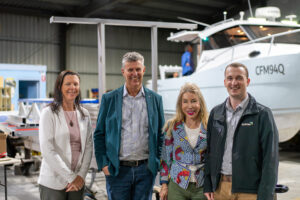
Here’s the complete photo album from the 2026 Hunter Manufacturing Awards launch event, held on 14 May at Brain Industries.
Enjoy!

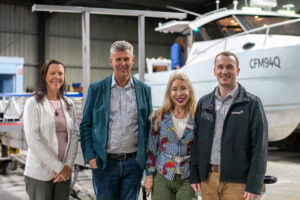
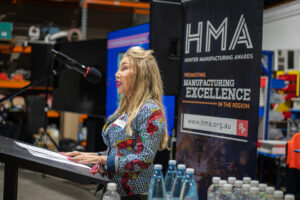
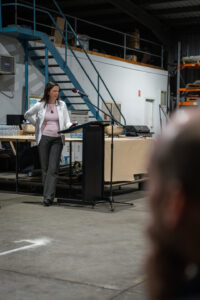
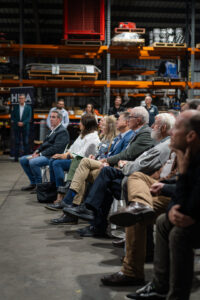
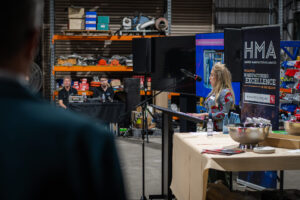
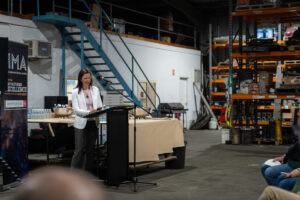
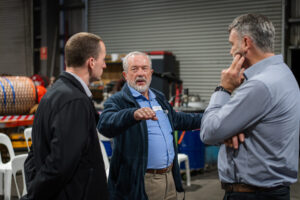

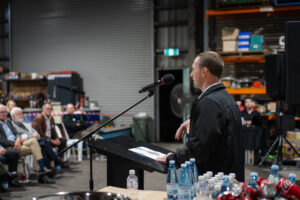
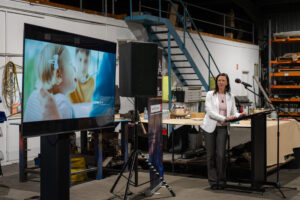
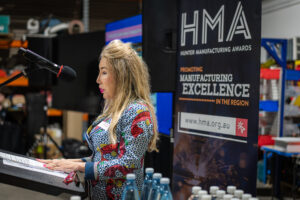
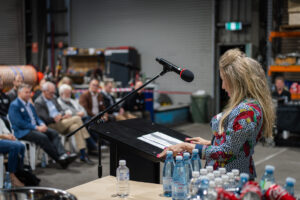
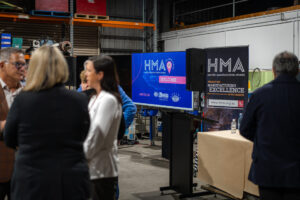
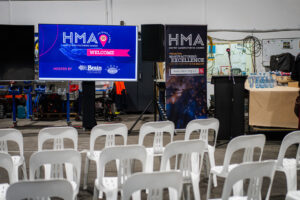

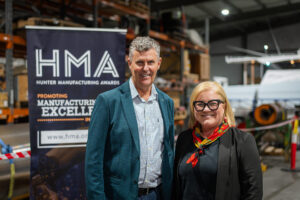
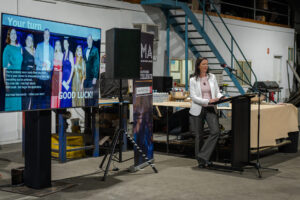
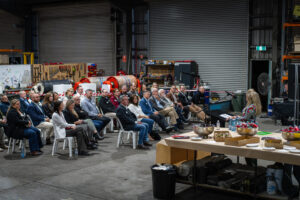
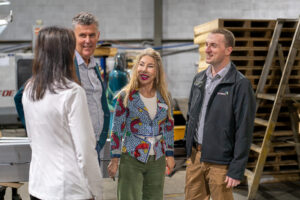
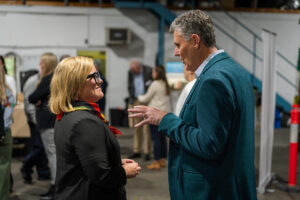

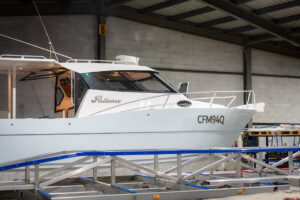
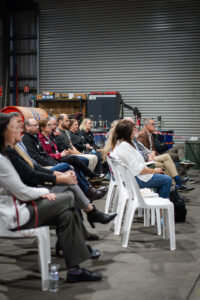
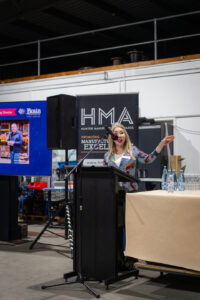
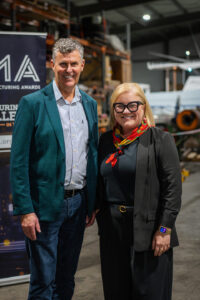
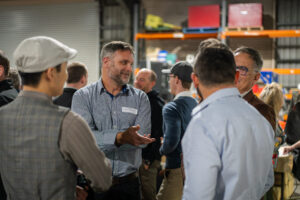
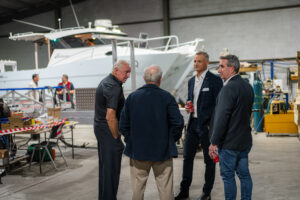
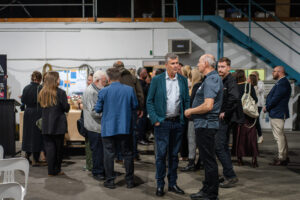
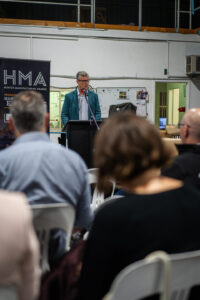
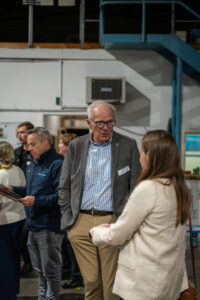
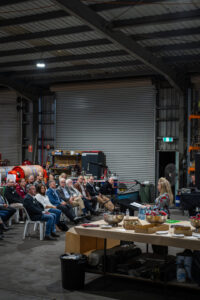
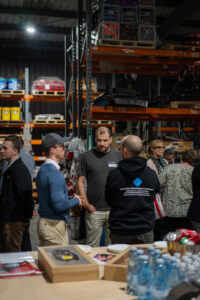
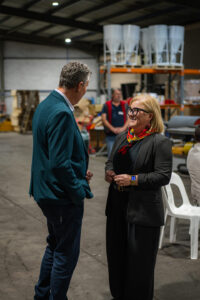

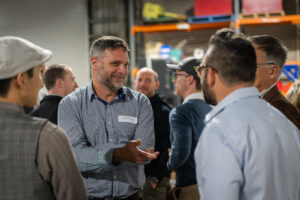

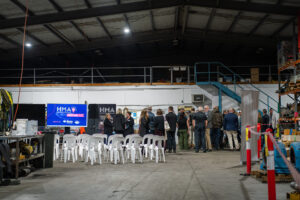
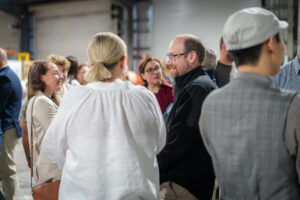
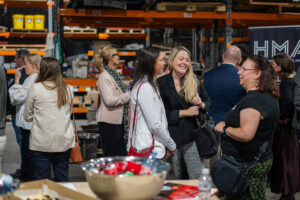
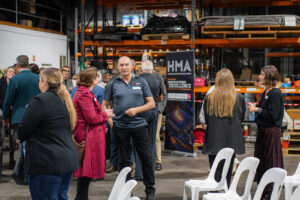
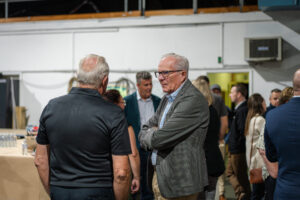
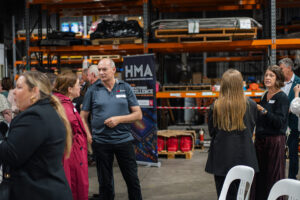



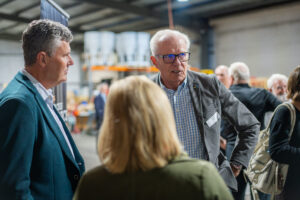




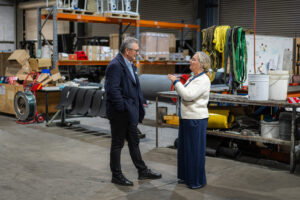

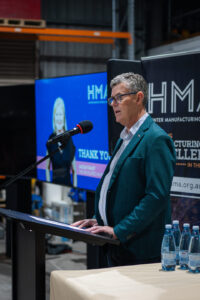


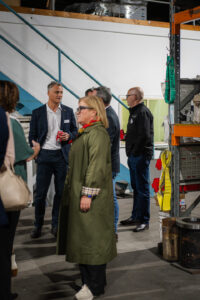
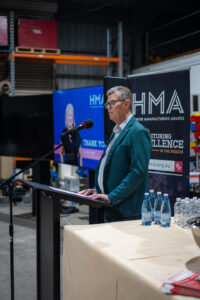
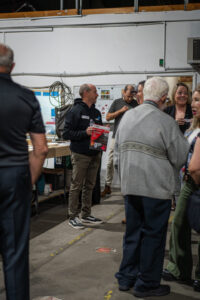
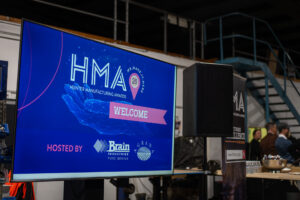
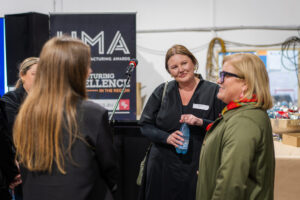
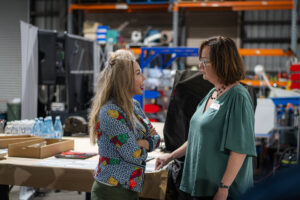
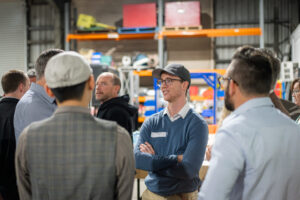
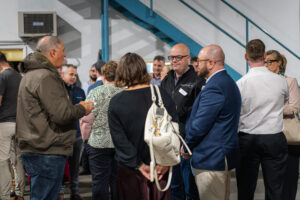
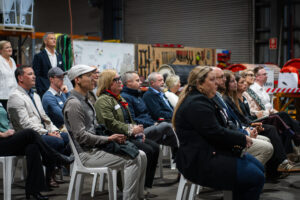


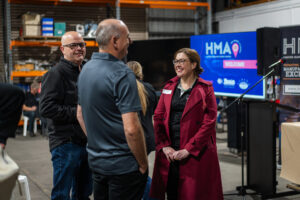
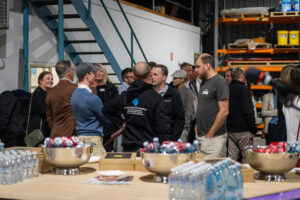
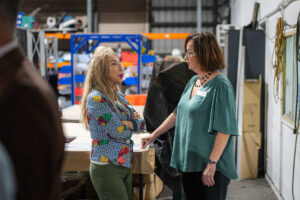




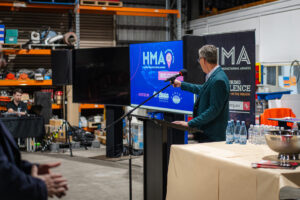
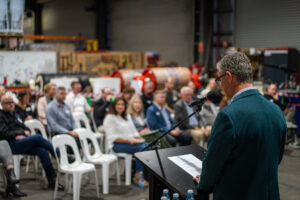
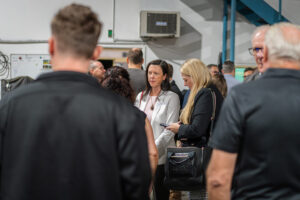
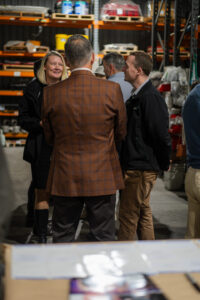

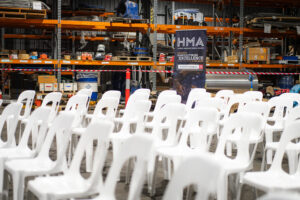
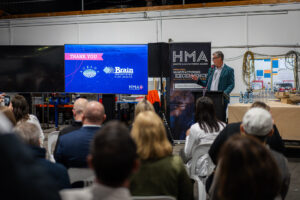
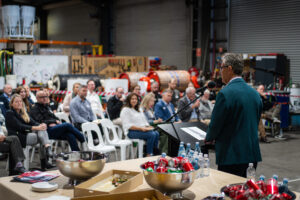

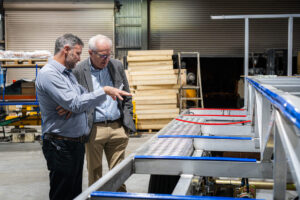
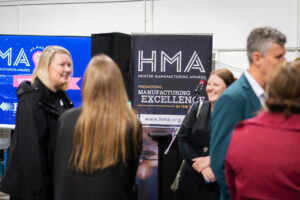

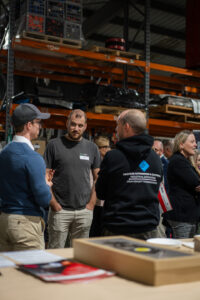
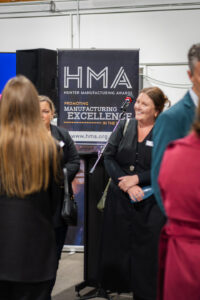

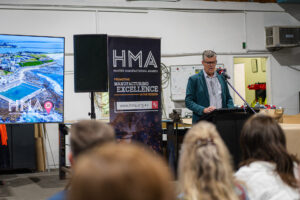
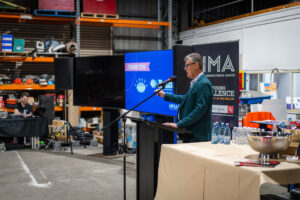
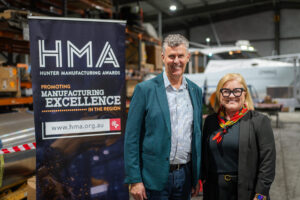
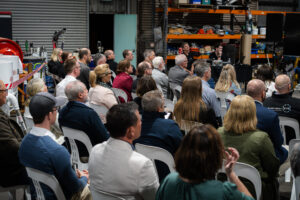
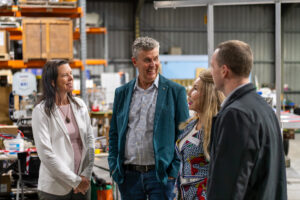
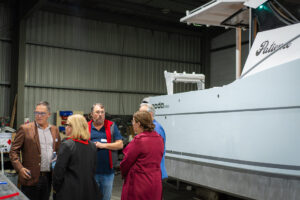
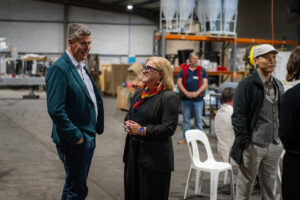
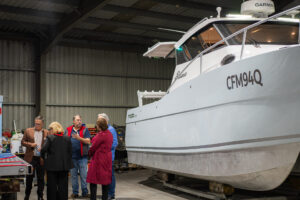
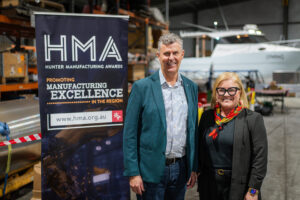
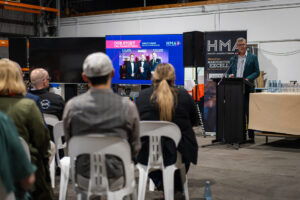
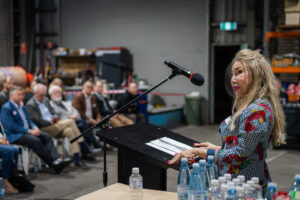
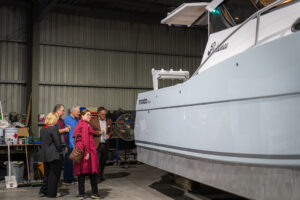
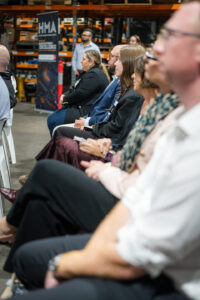
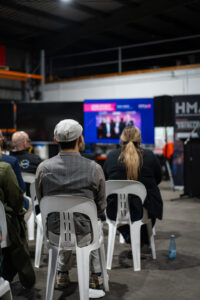
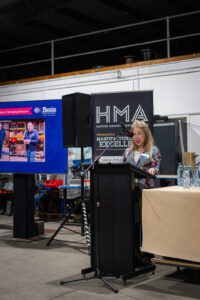
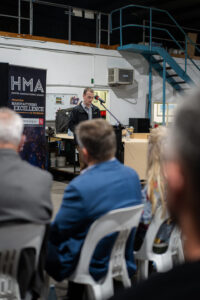
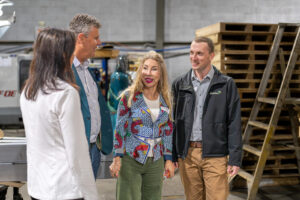
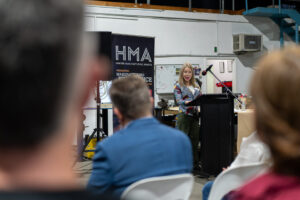
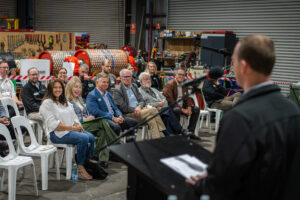
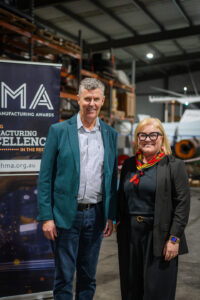
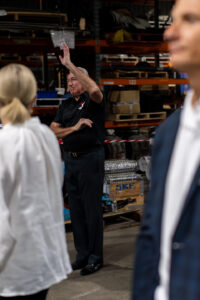
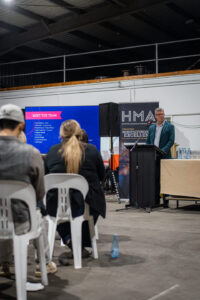
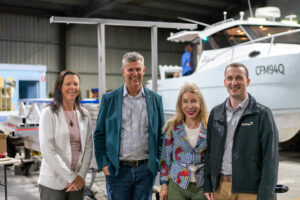
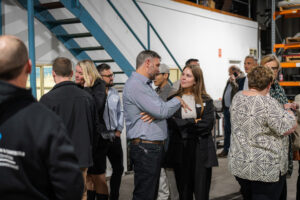
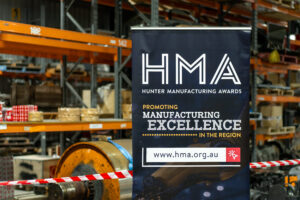
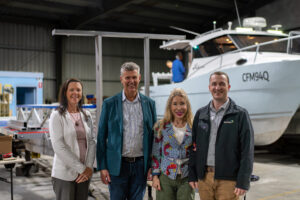
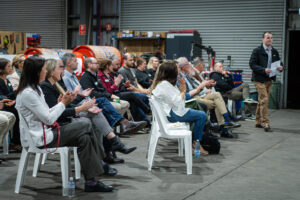
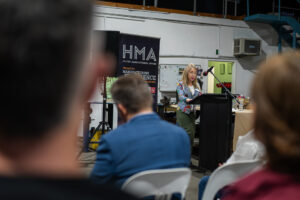
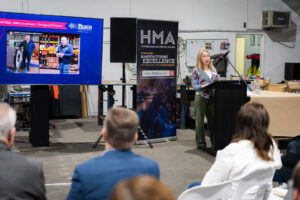
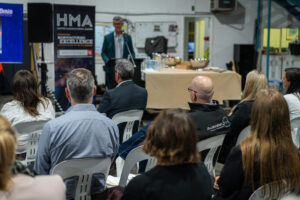
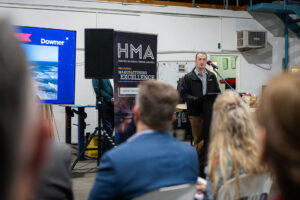
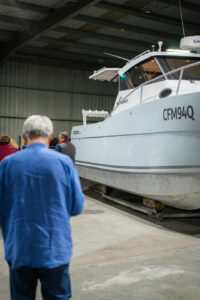


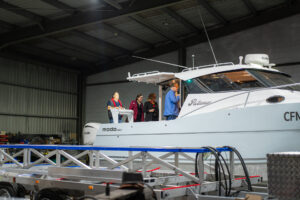
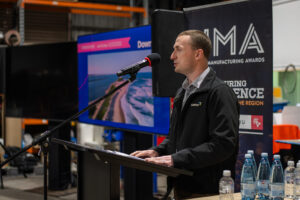
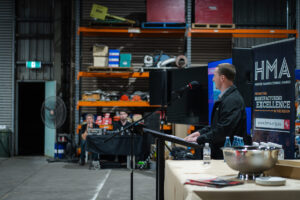

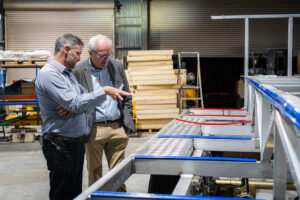



The Hunter Manufacturing Awards (HMA) has launched its 2026 program, celebrating innovation, capability, and global competitiveness as entries open for the Awards’ 22nd year.
The 2026 theme — We Make It Here — champions the people, products, and ideas driving the future of manufacturing across the Hunter, Central Coast, New England, and Mid-North Coast.
Following a record‑breaking 2025 program with entries up more than 50% and the largest Gala in HMA history, the 2026 Awards continue that momentum, reaffirming the commitment to regional manufacturing leadership at the state and national levels.
The 2026 Awards were officially launched at an industry function held on 14 May at Brain Industries in Carrington, NSW, hosted together with Agrana Fruit Australia, both 2025 Manufacturers of the Year in their respective categories.
New leadership guiding the next chapter
The 2026 Awards mark the first program under the leadership of new Chair Chris Kelleher, who steps into the role following 13 years as an HMA judge and a long career in manufacturing, commercialisation, and industry leadership.
Mr. Kelleher said the 2026 Awards reinforce the sector’s commitment to excellence and its belief in local production.
“Manufacturing across our region looks very different from what many people imagine. It’s no longer defined by a single industry or a single way of working — it spans advanced technology, food and beverage, medical products, textiles, energy, recycling, and so much more. What unites it all is the capability and determination of the people behind it. Manufacturing continues to evolve and adapt, asserting its place as a vital contributor to Australia’s industrial landscape and entering a period of renewed confidence and visibility.”
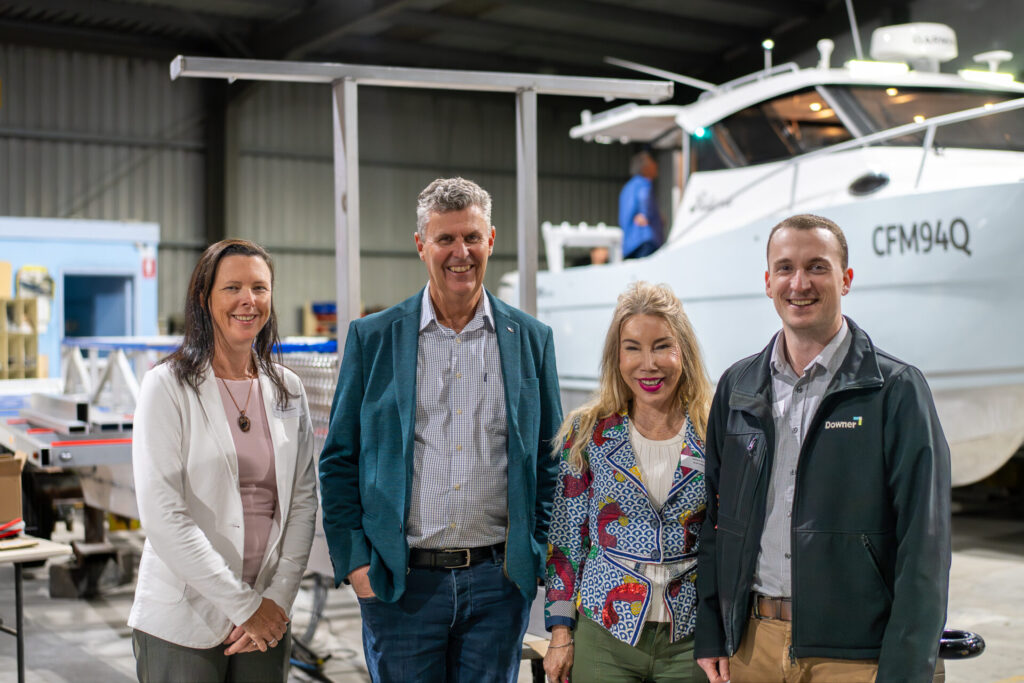
Industry voices: Brain Industries and Agrana Fruit Australia
Brain Industries Managing Director Gillian Summers said hosting the launch at its Carrington facility was a chance to demonstrate the capability and confidence of regional manufacturing.
“The role the Hunter Manufacturing Awards takes in promoting our region’s manufacturers and bringing them together is crucial. Our region is one of Australia’s leading advanced manufacturing export centres, by scaling up what we already do. We have never been short of capability. We need to be bold about promoting what we make, from batteries and defence to energy and industrial technology.”
Based on the Central Coast, Agrana Fruit Australia Chief Financial Officer Christine Chiesa said the Awards reinforce the strength and ambition driving regional manufacturing.
“Manufacturing in our region is bold, capable, and outward‑looking. At Agrana, we create fruit preparations and ingredients used by leading food and beverage brands across Australia and internationally — proof that regional manufacturers are shaping global supply chains and competing at the highest level. The HMA program celebrates that ambition and the ingenuity behind it. The fast‑tracking of winners to the national awards provides a powerful pathway for regional businesses to gain recognition on a broader stage.”
Regional winners to be fast-tracked to the national stage
Through the ongoing partnership with Industry Update and the Australian Manufacturing Awards, winners in selected and aligned categories will again be fast‑tracked as national finalists, providing a direct pathway to national recognition.
In 2025, Allegro Energy advanced through this pathway to win Best Start‑Up at the national level — a standout example of local innovation earning national acclaim. Introduced last year, this initiative has already expanded visibility for regional manufacturers, opening doors to new partnerships, markets, and opportunities
“The Hunter Manufacturing Awards recognise the makers, innovators, and problem‑solvers who remain a defining strength of our regional economy — capturing stories of determination, ingenuity, and the quiet confidence of businesses that build real things and create real impact. We don’t just make things — we make the future. The success of businesses like Allegro Energy, which went on to win Best Start‑Up at the National Manufacturing Awards, shows what’s possible when local innovation is recognised and championed. The 2026 Awards are about celebrating that diversity and every business that contributes to our region’s identity and economic strength. If you’re making something here, you’re part of this story,” added Mr. Kelleher.
Entries for the 2026 Hunter Manufacturing Awards are now open, inviting manufacturers to showcase innovation, excellence, and impact. The Awards continue to elevate Australia’s manufacturing sector — celebrating achievement, driving collaboration, and inspiring future industry leaders.
For entry details and category information, visit hma.org.au
A legacy of innovation nearly 140 years in the making has been honoured at the 2025 Hunter Manufacturing Awards, with Varley Group inducted into the Hunter Manufacturing Awards Hall of Fame for its contribution to the region’s industrial and manufacturing landscape.
Founded in 1886, Varley is one of the Hunter’s oldest and most respected companies, a major regional employer, skills developer, and national leader across defence, emergency services, marine, health, cyber and mining sectors.
The board-appointed induction recognises Varley’s ability to continually evolve, diversify and innovate while maintaining its headquarters and heart firmly in the Hunter.
HMA Chair Jacqui Daley said Varley’s recognition reflected the company’s enduring impact and its role in shaping both the region’s history and its future.
“Varley symbolises everything that’s great about manufacturing in this region, ingenuity, adaptability, and pride in building things that matter,” Ms Daley said.
“This is a business that has been operating through the 1800s, 1900s and now the 2000s – they’ve helped define what it means to make things in the Hunter, creating local jobs, developing skilled tradespeople, and delivering world-class capability across industries that are essential to Australia’s future.”
“From emergency response vehicles and naval systems to advanced defence, cyber and energy, Varley continues to prove that a company proudly based in the Hunter can lead on the national and global stage.”
Varley’s continued investment in apprenticeships, veterans’ employment, and STEM education was also commended, including partnerships with local schools, TAFE NSW and the University of Newcastle that support the next generation of manufacturing talent.
Still proudly headquartered in Newcastle after nearly 140 years, Varley employs more than 1,200 people across 12 facilities and supports hundreds of local suppliers. The company’s influence extends well beyond contracts and projects, it represents the ingenuity, loyalty and future focus that define manufacturing in the Hunter.
The 2025 Hall of Fame induction celebrates Varley’s enduring impact on the Hunter economy and its continued leadership in forging Australia’s manufacturing future.
From start-ups and apprentices to global exporters and century-old innovators, the 2025 Hunter Manufacturing Awards (HMA) have celebrated a sector on the rise, one that’s building the industries, technologies, and jobs of Australia’s future.
Now in its 21st year, the awards drew a record number of entries, more than 50% up on last year, showcasing the ingenuity, craftsmanship, and courage that continue to define manufacturing across the Hunter, Central Coast, Mid North Coast, and New England.
HMA Chair Jacqui Daley said the night was about recognising the strength, innovation, and resilience of a sector that is vital to Australia’s economic future.
“Manufacturing in the Hunter is more diverse, more advanced, and more connected to the world than ever before,” Ms Daley said. Our 2025 Manufacturer of the Year winners, Brain Industries and Agrana Fruit Australia, both have export at the heart of their success. They’re taking the Hunter to the world and proving that regional manufacturers can compete, and succeed, on the international stage.”
“We’re seeing extraordinary things being made right here, from Elecbrakes revolutionising towing technology through Australian-made automation, to Supacell turning everyday recyclables into sustainable insulation, and from Tomago Aluminium’s digital transformation to Design Anthology’s advanced med-tech design.”
“Manufacturing isn’t sitting quietly behind the scenes anymore. It’s the backbone of our economy, the engine of regional jobs, and the platform that will power Australia’s next great leaps in clean energy, defence capability, health, and technology.”
Minister for the Hunter Yasmin Catley congratulated all winners and finalists, acknowledging their contribution to the region’s proud industrial legacy and future growth.
“Tonight’s celebration is the best of the Hunter on display, our ingenuity, our craftsmanship, and our courage to reimagine what’s possible,” Minister Catley said.
“This year’s Hunter Manufacturing Awards theme, Forging Our Future, could not be more fitting. It speaks to our proud industrial heritage and our bold journey into advanced, sustainable, and inclusive manufacturing.”
Major winners included:
Category winners for 2025 are:
Winners from the 2025 HMAs will be fast-tracked as national finalists in the 2026 Australian Manufacturing Awards. Five 2024 winners were included in last week’s national awards – Apollo Engineering, Whiteley, SAPHI, WesTrac’s Apprentice of the Year Christie Hayward, and Allegro Energy – with Allegro taking home the Best Start-Up Award.
Why do manufacturing companies with the strongest technical capabilities often struggle most with revenue predictability?
The answer reveals a fundamental misalignment between how manufacturers operate and how they generate revenue.
A single client can account for 15% of annual revenue for mid-sized manufacturers. Three major prospects in final negotiations can swing quarterly results, depending on the timing and outcomes. Meanwhile, boards demand predictable growth forecasts in markets where 18-month sales cycles and project-based revenue patterns make traditional forecasting methodologies essentially worthless.
Australian manufacturing data reveals the scale of this challenge. According to the Ai Group’s May 2025 industry indicators, manufacturing entered a recession in the second half of 2024, with output contracting at a 1.7% annual rate, demonstrating how quickly market conditions can shift and disrupt traditional revenue planning approaches.
This volatility exposes the fundamental weakness of reactive revenue strategies. When external conditions deteriorate rapidly, manufacturers relying on word-of-mouth leads, opportunistic RFPs, and hope-based forecasting find themselves unprepared and vulnerable.
Manufacturing revenue differs fundamentally from software or service businesses in ways that amplify this challenge. Extended sales cycles of 12-18 months mean deals negotiated in favourable conditions must close in deteriorating markets. Project-based revenue creates binary outcomes, where individual opportunities can account for up to 40% of annual revenue for mid-sized manufacturers. When major prospects enter final negotiations during market downturns, revenue swings become dramatic—and single deal losses can devastate quarterly performance.
Having worked with organisations in the manufacturing sector for decades, we’ve seen that those that maintain growth during downturns have some common characteristics:
Market leaders understand that existing customers represent the most predictable revenue source available to manufacturing companies. Research reveals that expanding revenue from existing accounts costs 5-7 times less than acquiring new customers, with success rates of 60-70% compared to 5-20% for new customer acquisition.
Systematic account development beats opportunistic upselling during downturns. Rather than waiting for customers to request additional services, consider implementing structured account development processes. This might include annual capability reviews, proactive identification of expansion opportunities, and systematic relationship mapping across multiple stakeholders within existing accounts.
Maintenance and service revenue create a baseline level of predictability and stability, enabling more aggressive investments in new customer acquisition.
Successful manufacturers abandon the myth that one sales approach works across all market segments. Instead, they develop segment-specific acquisition strategies that acknowledge different buying processes, decision criteria, and relationship requirements across market tiers.
Market volatility demands better opportunity qualification than traditional sales frameworks provide. The manufacturers that avoided major losses during economic downturns asked three critical questions before investing significant resources in any opportunity:
This approach prevents pursuing opportunities where fundamental barriers will eventually eliminate prospects, regardless of the strength of the relationship or competitive positioning.
It’s important to remember that while these approaches are effective, they aren’t universal solutions. Three limitations determine where systematic revenue generation works and where it doesn’t:
Evidence-based revenue generation is most effective when manufacturers focus on winnable opportunities, such as systematic installed base development, market-segment-specific acquisition strategies, and qualification processes that acknowledge the complexity of manufacturing sales.
Successful transformation is built around three core capabilities: expanding existing customer revenue, acquiring new customers in a market-matched manner, and qualifying strategic opportunities. These approaches are most effective when implemented systematically over 12-24 months, rather than as tactical, quick fixes.
The goal isn’t to compete in every revenue opportunity. It’s to compete where systematic approaches genuinely influence outcomes. In those targeted scenarios, strategic revenue generation transforms manufacturing from a reactive order-taking process into a proactive market development approach.
Technical capabilities remain the foundation. Systematic revenue generation ensures they achieve the market recognition – and financial results – they deserve.
Sponsored by Brand chemistry

Central Coast Industry Connect is creating a new future for regional manufacturing through training programs, facilities and network opportunities.
Not a single food and beverage business is immune to manufacturing problems or challenges. Small to medium enterprises (SMEs) face a mixed bag of pain points from regulations operational costs, and access to a modern facility, while larger manufacturers find themselves running dry in the talent pool due to poor infrastructure or training.
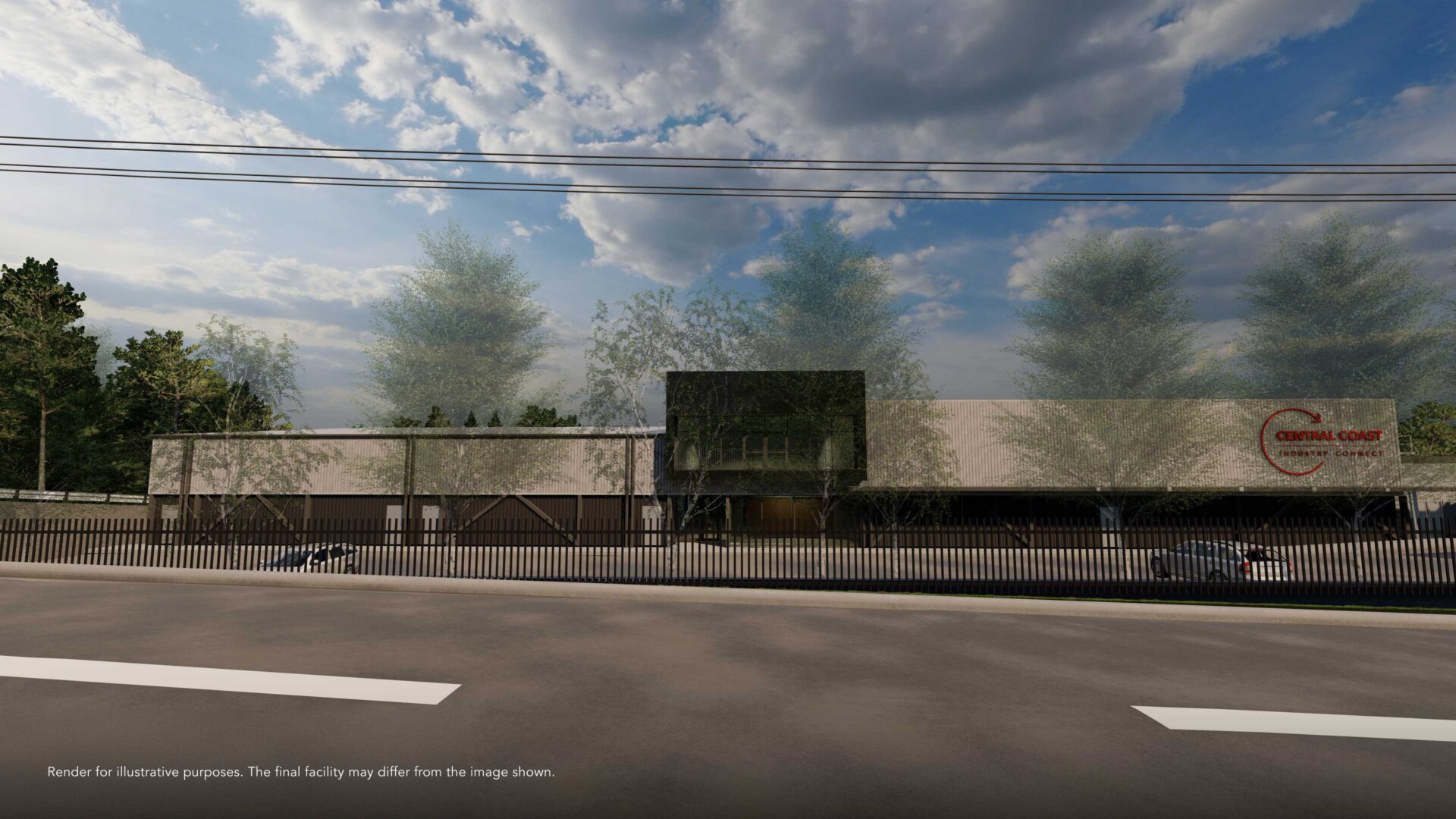
Addressing these challenges is Central Coast Industry Connect (CCIC), a driving force behind one of New South Wales’ manufacturing regions. The not-for-profit organisation aims to promote collaboration and capability building through a $17.14 million project – the Central Coast Food Manufacturing Innovation Hub (the Hub).
Through the support of the Australian government, University of Newcastle, Central Coast Council, and Regional Development Australia Central Coast, CCIC aims to drive innovation, build skills, and grow the region. The facility is designed to support both established manufacturers and SMEs through pilot and training spaces, positioning the Central Coast as a premier destination for food manufacturing.
Manufacturing Advancement Centre
Construction for the Hub was announced in April 2025 and is expected to be operational by March 2026. The team has already opened expressions of interest for tenancy and is rolling out industry-led training programs. With more than 40 years of experience in the food industry, including roles such as operations director at Sara Lee Baking Co, executive officer Frank Sammut mentioned a focus on food manufacturing.
“Manufacturing output in the Central Coast is $4.7 billion,” he said. “Within that output, food manufacturing sits at $2 billion and it is a big part of our focus.”
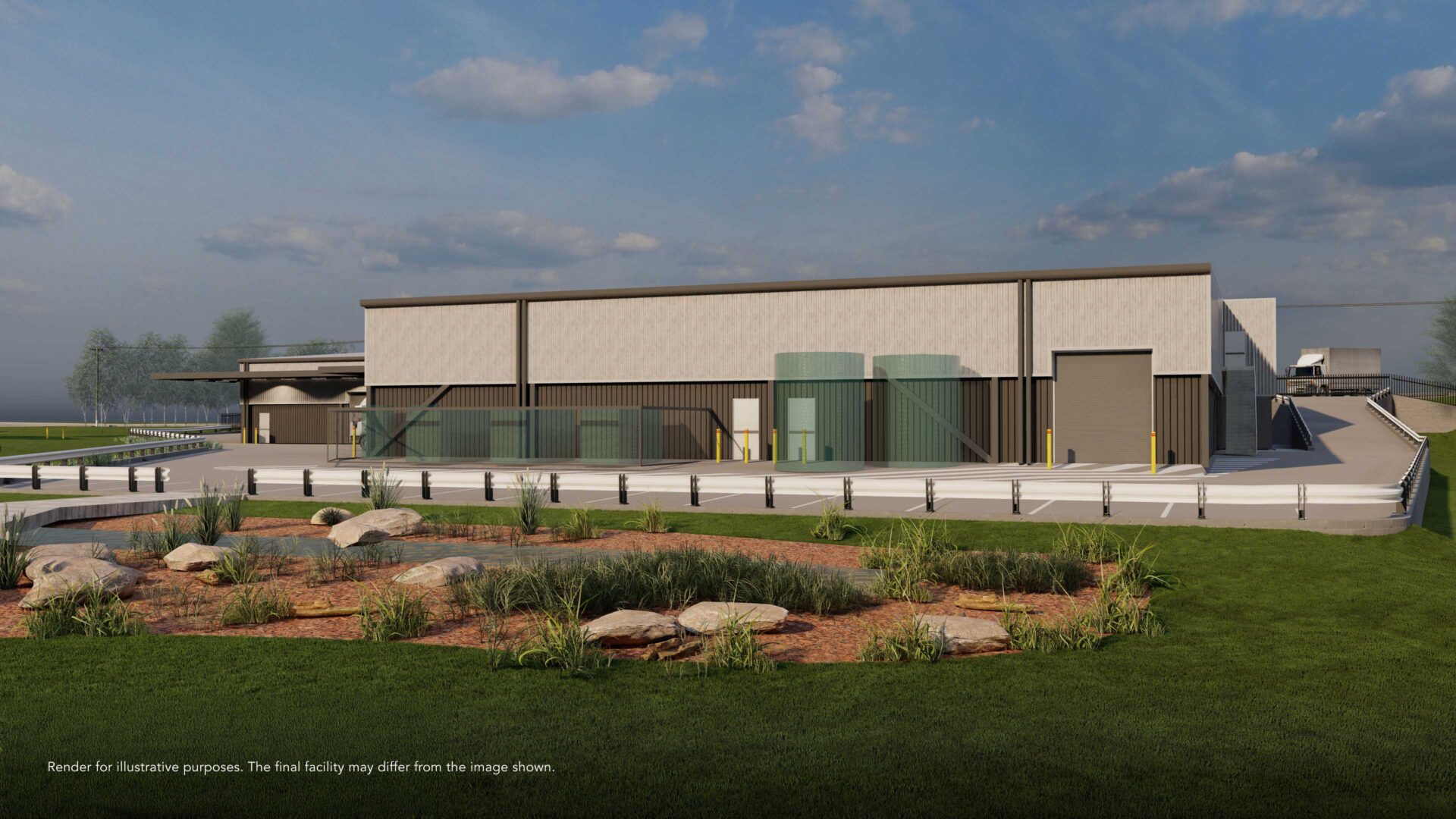
Aiming to unlock the $2 billion Central Coast food and beverage manufacturing potential, CCIC acts as a hub connecting local businesses, educational institutions, and government to strengthen the region’s industrial base. Designed for flexibility, the Hub features production spaces, pilot lines, and testing areas where businesses can refine their processes and test new products before commercial launch. The Hub is also home to research partnerships focused on sustainability, packaging innovation, and process improvement.
For small food producers, access to shared facilities reduces the high cost of capital investment. It also creates a collaborative environment where producers can share ideas, equipment, and expertise. For larger businesses, it offers opportunities to trial new technologies and form partnerships with smaller suppliers.
At the heart of the Hub will be the Manufacturing Advancement Centre, delivering pragmatic approaches to business improvement for both food and non-food manufacturers. It will provide tailored mentoring and guidance from industry experts with a focus on helping businesses navigate compliance, sustainability, and market access.
“The Manufacturing Advancement Centre will be the delivery arm of the leadership programs that sit within the innovation hub, and we aim to be a centre of excellence in the area,” said Sammut.
The Centre’s offerings include technical and product development support, management and shop floor training programs, and access to a network of specialised service providers. Additionally, services will meet the needs of businesses of all sizes. By locating the Hub in the heart of the Central Coast, CCIC has created a platform for growth that benefits both local and national producers.
Pilot facility, training and workforce development
Of the 2,000 square metre Hub, the pilot facility takes about 400 square metres, with the rest divided into eight factory bays ranging between 136 and 200 square metres. Sammut said the purpose-built and production-ready pilot facility is designed for scalable manufacturing. The food-grade spaces and shared infrastructure lower overall costs for SMEs, reducing manufacturing barriers.
“We’re across brewing, extrusion, baking, hot sauce cooking, and have packaging equipment for canning and flow wrapping,” he said.
The Hub also includes technologies such as 3D food printing, x-ray, and foreign matter detection, and is looking to incorporate robotics and automation. The equipment and technology will be available in the pilot area for training, which further supports prototyping.
For the food sector, challenges surrounding speed and efficiency are often caused by a lack of skills training and workforce infrastructure. Manufacturing growth depends on attracting and retaining skilled workers. In response, the Hub offers modern training facilities to support practical skills and workforce development. It builds on the 2024 CCIC Interim Skills Hub model that prepares a talent pipeline to support business capability.
Industry-led training programs focusing on manufacturing leadership, product innovation, and machine operation will be open to a range of participants, from students and industry professionals to small business owners. With the activities delivered by CCIC and partners, Sammut said that training is not only valuable for skills – it extends to pre-employment.
The programs will support broader inclusion and training opportunities for women, Aboriginal people, and unemployed individuals who are ready to be part of the region’s manufacturing future. They will also increase collaborations with schools and training organisations to ensure that future generations see manufacturing as a viable career path.
Growth rooted in collaboration
For regional economic growth, CCIC emphasises the importance of community. The Hub is designed as a gathering place for manufacturers, researchers, educators, students, and service providers. By encouraging collaboration, CCIC aims to bridge the gap between different industry experts, fostering a sense of community. As businesses begin to share resources, overcome challenges, and celebrate successes together, it has the potential to attract new enterprises and investment to the Central Coast.
Local manufacturers and SMEs can find benefits beyond networking opportunities – from technical support in engineering and R&D. For larger businesses, it means access to training programs for new pilot technologies, strengthening talent pipelines, and contributing to sustainable regional growth.
When collaboration comes into the picture, mutual benefits can build industry links. By embedding the wider network at the Hub, opportunities and positive economic impacts will be created, boosting the capability of the region’s food and beverage sector.
For more than 12 years, CCIC’s focus has remained clear – to support a manufacturing sector that is innovative, collaborative, and resilient. From food and beverage producers to advanced manufacturers, the organisation is helping create a thriving ecosystem.
“There are so many opportunities that the food sector can learn from other manufacturing sectors,” said Sammut.
Looking ahead, the organisation aims to build on its existing foundation by expanding its facilities and programs. The next stage is to continue bringing the industry together through tourism with its Food Makers Trail and the planned warehouse and distribution centre.
With all the elements in place to support the region’s food and beverage manufacturing ecosystem, Sammut’s goal is to ensure that the Central Coast is recognised as a key contributor to Australia’s manufacturing resurgence, elevating SMEs and larger manufacturers alike through proper guidance and collaboration.
“Longer term, we want to make the Central Coast a destination for food and beverage manufacturing,” he said.
Learn more and submit your EOI
or contact: admin@centralcoastindustryconnect.com.au
What if a smaller marketing budget could become your most significant competitive advantage?
Most businesses facing budget cuts assume they’re at a disadvantage. The conversation always follows the same pattern: cut the “nice-to-haves,” focus on essentials, and hope that word of mouth carries the load.
But here’s a counterintuitive truth: tight budgets don’t just force survival. They create competitive advantages that well-funded competitors can’t replicate.
Recent Australian Bureau of Statistics data tells the story: manufacturing employment is down 15% since 2010, yet productivity continues to rise. Manufacturing value added fell $3.6 billion (-7.1%) in 2023-24, forcing ruthless prioritisation of every dollar spent.
While it may seem counterintuitive, this pressure creates something valuable. When budgets tighten, vanity metrics die fast. That glossy trade show booth gets scrutinised against actual lead costs. The quarterly newsletter transforms into targeted digital campaigns with measurable ROI. Marketing evolves from a cost centre to a revenue driver because it has to.
Suddenly, every marketing decision gets filtered through a simple question: Does this drive revenue or just consume budget? And that pressure offers three critical disciplines that well-funded competitors often lack:
When you can’t afford to chase everyone, you get surgical about who matters. Ten conversations with the right prospects beat 1,000 conversations with the market at large.
While competitors spray messages across entire industries, you develop deep relationships with decision-makers who actually matter. Research shows that targeted approaches deliver superior ROI compared to broad market coverage – but many manufacturers with bigger budgets never develop this discipline.
Lean budgets can’t sustain awareness campaigns hoping to build trust over time. Every dollar needs to drive credibility immediately, forcing you to lead with evidence rather than aspiration.
This constraint becomes a strength. When you can’t outspend competitors on brand building, you out-evidence them on capability demonstration. Your case studies get sharper. Your testimonials get more specific. Your technical demonstrations get more compelling – because they have to be.
Well-funded competitors often rely on brand awareness to carry weak propositions. Your budget forces every marketing piece to prove value immediately, creating more persuasive marketing than money alone can buy.
If you can’t trace marketing activity to pipeline impact, it gets cut. This pressure creates something valuable: marketing and sales alignment born from necessity rather than ideology.
A focus on attribution will serve you well now and in the long term. When budgets increase, manufacturers who learned to track every dollar’s ROI simply amplify what works, while competitors return to wasteful spending.
The manufacturers who weather economic cycles best don’t just cut marketing budgets during downturns – they build systems that get stronger under budget pressure. Here’s a proven framework:
This isn’t about ‘doing more with less’ – it’s about doing the right things with laser focus.
These disciplines create lasting competitive advantages that persist even when budgets recover:
Start with these strategic questions:
Your answers reveal where your manufacturing marketing budget – however limited – creates maximum impact.
The truth: Budget constraints aren’t limitations to overcome. They’re competitive advantages to leverage. The manufacturers winning today aren’t waiting for bigger budgets. They’re using lean budget disciplines to outmanoeuvre better-funded competitors who’ve never learned to be strategic.
Technical capabilities remain the foundation. Strategic budget discipline ensures they receive the consideration they deserve.

Finalists announced for the 2025 Hunter Manufacturing Awards
The Hunter Manufacturing Awards (HMA) have announced the finalists for 2025, recognising the breadth and capability of the manufacturing sector across the Hunter, Central Coast, Mid North Coast and surrounding regions.
A record number of entries were received this year, reflecting a strong mix of first-time entrants, emerging start-ups and established industry leaders. The response to new award categories demonstrated the sector’s continuing diversification and its capacity to adapt to new technologies and markets.
“The 2025 finalists demonstrate the depth of manufacturing talent in our region,” said HMA Chair, Jacqui Daley.
“They represent businesses solving complex challenges, developing new products and contributing to economic growth and secure employment across regional New South Wales.”
Ms Daley said the list of finalists illustrates the broad scope of the region’s manufacturing capability, from food and beverage producers and heavy engineering firms to renewable energy innovators, mining suppliers, recyclers and advanced technology developers.
“Manufacturing remains one of the Hunter’s most significant economic strengths. With $26 billion in output each year, the sector is one of the largest contributors to the regional economy second only to mining. It’s encouraging is the level of innovation and collaboration we’re seeing across sectors, with businesses of all sizes contributing to the region’s reputation for quality and ingenuity,” she said.
The awards also include initiatives to encourage the next generation of leaders. The Start-up Award winner will receive a 12-month HunterNet membership to support their business growth, while the Rising Star will join the HMA Board as a guest member to develop their leadership experience.
Two winners of Manufacturer of the Year, for businesses with fewer than and more than 50 employees, will each receive a $5,000 international travel voucher, supported by HMA and travel partner Helloworld Business Travel. The HMAs will also honour the legacy of our region’s greats by inducting another individual or company into the HMA Hall of Fame.
2025 HMA finalist companies
2025 HMA finalist individuals
Apprentice of the Year
Rising Star
Manufacturing Leader
🎉 CELEBRATE WITH US
Finalists will be celebrated, and winners revealed, at the Hunter Manufacturing Awards Gala. Don’t miss the biggest night of the year for our region’s manufacturing community.
📅 Thursday 30 October 2025
📍 Newcastle Exhibition & Convention Centre (NEX)
Tickets are on sale now – secure your spot and be part of the celebration!
Manufacturing in the Hunter is undergoing a quiet resurgence, with $26 billion in annual output and a growing number of businesses embracing clean energy, digital transformation and inclusive practices. That shift is reflected in a record number of applications for the Hunter Manufacturing Awards, with a 44% increase in applications, including 11 first-time entrants.
The strong response points to a sector in transition, with significant growth seen in award categories such as innovation, product design and sustainability. The introduction of two new categories, Diversity in Manufacturing and Digital Transformation, was also met with enthusiasm, reflecting how manufacturers across the Hunter, Central and Mid North Coasts are adapting to the demands of a modern, resilient economy.
“This year’s entries tell a bigger story than just numbers,” said HMA Chair Jacqui Daley. “They reveal a sector that is shifting gear, embracing advanced technologies, investing in cleaner, smarter production, and creating more inclusive workplaces.”
Manufacturing continues to be one of the most important industries in the region, second only to mining in terms of output. While traditional industries such as steelmaking, aluminium and machinery fabrication still play a key role, the Hunter’s manufacturing landscape is being reshaped by growth in clean energy technologies, defence and aerospace, pharmaceuticals, and food and beverage production.
“In every corner of our region, we’re seeing manufacturers step up with creativity and capability, from batteries and boats to breakfast cereals and biotech,” said Daley. “The 2025 entries showcase the real breadth and depth of talent we have here.”
Now in its 21st year, the Hunter Manufacturing Awards program continues to celebrate the people, processes and progress shaping the region’s industrial future.
Winners of the 2025 Hunter Manufacturing Awards will be announced at the gala event on Thursday 30 October 2025 at NEX, Newcastle . The event brings together manufacturers, innovators, educators and supporters to celebrate excellence and chart the next chapter in the region’s manufacturing story.
Let’s address the elephant in the procurement room: large manufacturers often win RFPs for legitimate reasons. Economies of scale, established relationships, comprehensive capabilities, and superior resources create genuine competitive advantages that positioning alone cannot overcome.
But here’s what the data reveals: positioning still matters in the margins of decision-making. And for SME manufacturers, those margins often determine whether they are even invited to compete.
So where does that leave SME manufacturers who need to win their share of contracts to survive and grow?
Insights from the Australian Department of Finance indicate that SMEs secure 52.3% of government contracts by volume, yet capture only 18.8% of the total spending value. The brutal economics tell the story: average SME preparation costs reach $15,000 per $250,000 contract, with first-time bidders achieving a success rate of just 16.7%.
However, these averages mask significant variation across sectors. Engineering services tell a different story entirely, with SMEs capturing 59.3% of market share. Professional services follow at 51.5%, and IT and telecommunications at 48.5%. What connects these sectors? They’re all knowledge-intensive industries where expertise positioning matters more than scale advantages.
Manufacturing presents another encouraging data point. Margins have improved from 9% to 11% since 2020, signalling that buyers are increasingly prioritising value over pure cost considerations. This shift creates genuine opportunities for positioning strategies that emphasise capabilities beyond price competition.
Research from Challenger Inc.’s decade-long study of over 5,000 B2B purchase decisions reveals the measurable impact of positioning: sales experience drives 53% of customer loyalty, compared to just 9% for price factors. Brand reputation and product delivery each contribute 19%.
This research translates directly to RFP procurement, where positioning impacts outcomes at four critical stages:
Analysis of successful Australian manufacturing SMEs reveals three positioning strategies with measurable impact on procurement success:
Market leaders don’t just respond to RFP specifications – they shape how buyers think about their problems. Positioning strategies are most effective when selling firms communicate attributes that are both congruent and important to the buying firm.
SAGE Automation exemplifies this approach. Rather than positioning as “automation suppliers,” they established themselves around “The Best Thinking”, helping buyers recognise that their real challenge wasn’t just automation, but strategic industrial transformation. This positioning shift moved sales conversations from technical specifications to strategic partnerships.
SMEs achieve their strongest performance by focusing on niche markets rather than trying to appeal to the broadest possible audience. Knowledge-intensive sectors reward specialised expertise over size advantages.
This principle applies even to established firms looking to break through growth ceilings. MRA Engineering demonstrated this lever effectively in their RFP strategy. After 25 years of providing general engineering services, they repositioned around their proprietary Smart Automation Products for global markets. By separating their Australian services from their specialist product strategy, they transformed from regional generalist to global specialist, enabling worldwide expansion.
Even when price remains a primary factor, positioning can shift the evaluation criteria toward factors like technical competence, relationship quality, and total cost of ownership.
This approach works best in mid-tier contracts ($200K-$4M) where SMEs compete most effectively. It fails in commodity manufacturing where scale economics dominate, but resonates when positioning addresses risk reduction, innovation capabilities, or long-term partnership value.
Before developing your positioning strategy, SME manufacturers must understand where positioning can and cannot help. These structural barriers determine which battles are worth fighting:
Even with the right positioning strategy, execution determines success. Positioning takes 12-18 months to influence market perception meaningfully, and it works in conjunction with, not instead of, competitive fundamentals. SME manufacturers need to consider three critical factors when implementing positioning strategies:
Evidence-based positioning is most effective when SMEs focus on winnable battles: knowledge-intensive sectors, mid-tier contracts, and pre-qualification stages where expertise creates measurable advantage.
Successful positioning builds around three core elements: problem identification capabilities, specialised technical expertise, and relationship-based value delivery. These approaches align with research showing that sales experience and technical competence drive buyer loyalty more than price factors alone.
The goal isn’t to compete in every RFP opportunity—it’s to compete where positioning genuinely influences outcomes. In those targeted scenarios, strategic positioning transforms procurement from pure price competition into expertise evaluation.
Technical capabilities remain the foundation. Strategic positioning ensures they receive the consideration they deserve.
Sponsored by Brand chemistry